While the arrival of the summer solstice implies all the glory and abundance of the season in more temperate climates, it represents an equally dramatic - if considerably different - moment here in the desert. It is a bit more like midwinter, but with the added angst of watching non-dormant plants deal with the brutalities flung at them by the climate.
The Sonora desert, with its extremely low humidity and southern latitude, is perhaps at its most intense just now. Mary Irish, in her book
Gardening in the Desert, explains that summer can best be viewed as two seasons in this region. The first is the hot, dry months of May and June, the second, the hot but moister months of July and August, when the monsoon rains begin. The first is clearly the most difficult period for the garden.
As such, this is in one sense the time I have been planning for since the inception of this garden. Which plants would survive the hottest, driest days of summer? I am beginning to find out. This post is a sort of summary of how the garden is coping. It is a long post as I intend to take a brief look at almost every plant in the garden.
Structural plants
I am coming to the conclusion that midsummer annuals have no role in the early stages of the desert garden. This season will be better viewed as the southern equivalent of winter: a time to enjoy the basic structural components that remain happy and viable through every month of the year, good or bad.
First, one tree. I hope to add more next fall, but for now the tree element is represented by Acacia salicina, which is proving a good choice, thriving down in the Dry Corner.
Little Lagerstroemia "Rhapsody in Pink" - to be trained to tree-form - will add some shade and height in the south border. It is also proving its capacity to grow in this climate. I look forward to the days when its soft foliage becomes more of a presence across the south end of the garden.
One of my pleasantest surprises has been the rosemary hedge. For whatever reason, I did not have much faith in my ability to establish a young hedge in the first year. It still covers only the south end of the garden and lacks one or two plants at the very end, but it is a hedge! Most plants look healthy or very healthy. The only difficulty so far has been from spider mites, and the occasional hosedown has kept them in check. All the plants are "Tuscan Blue", said to have a fairly narrow, upright habit. I hope to grow future plants from cuttings of these as the hedge is intended to surround much of the garden.

Each end of the southern hedge - well, only one end currently - is accented by the surprisingly elegant Leucophyllum, variety now unknown as they came home unmarked and I forgot to write the name down! Luckily I bought both together so they will match even if I can't remember the varietal name. The one up by the patio was planted early this year; I waited with the second as I could easily imagine it being trampled by speeding dogs and even - must I admit - careless humans. Leucophyllums generally are excellent shrubs for use in the desert. Originating in the southwestern US, they seem nearly impervious to heat and drought, possibly requiring both. I intend to give these a light shearing to encourage a more formal effect, but for now they are reaching in all directions.

Other shrubs already in place include Genista stenopetala, which will form one end of the east side of the hedge. It is doing fairly well, though yellowing up a bit in the current weather. Eremophila "Valentine" remains unfazed. It is a remarkable plant - what else can I say, except to note that it is still throwing off the occasional brilliant pink bloom, hardly necessary as it is quite attractive in any case.
Eremophila "Outback Sunrise" is a low-growing, wide-spreading groundcover type. It is showing a few brown leaves; most unfortunately, I am not sure whether these are from lack of water or from too much run-off from the nearby Lagerstroemia, which I have kept well-watered as it establishes. I think the eremophila will pull through without difficulty in any case, but it would be nice to know...
Then there are some smaller plants which form such a strong presence as to be included as "structural". Among the most notable are the lavenders. Lavendula stoechas "Madrid" and L. "Goodwin's Creek Gray" are thriving. L. s. "Blueberry Ruffles" has sulked most of the time since I bought it, having never been as vigourous as "Madrid". It is one of those plants. I decided to abandon it to the elements, though I never completely stopped watering it, since when it has at least survived, but it still looks sorry enough. It is hardly fair to judge a variety by one individual, perhaps; but I will certainly use "Madrid" in preference. Both are Spanish lavenders of similar appearance and, as I recall, comparable mature size, so there is no real need to seek further than the happily growing one, shown here all bushy with new growth.

L. "Goodwin's Creek Gray" is another type of lavender altogether, believed to be derived from L. dentata. Its silvery, plush foliage is a beautiful accent, and the flowerheads, some actually in bloom now, are of a deep purple colour which I find peculiarly satisfying in this garden.
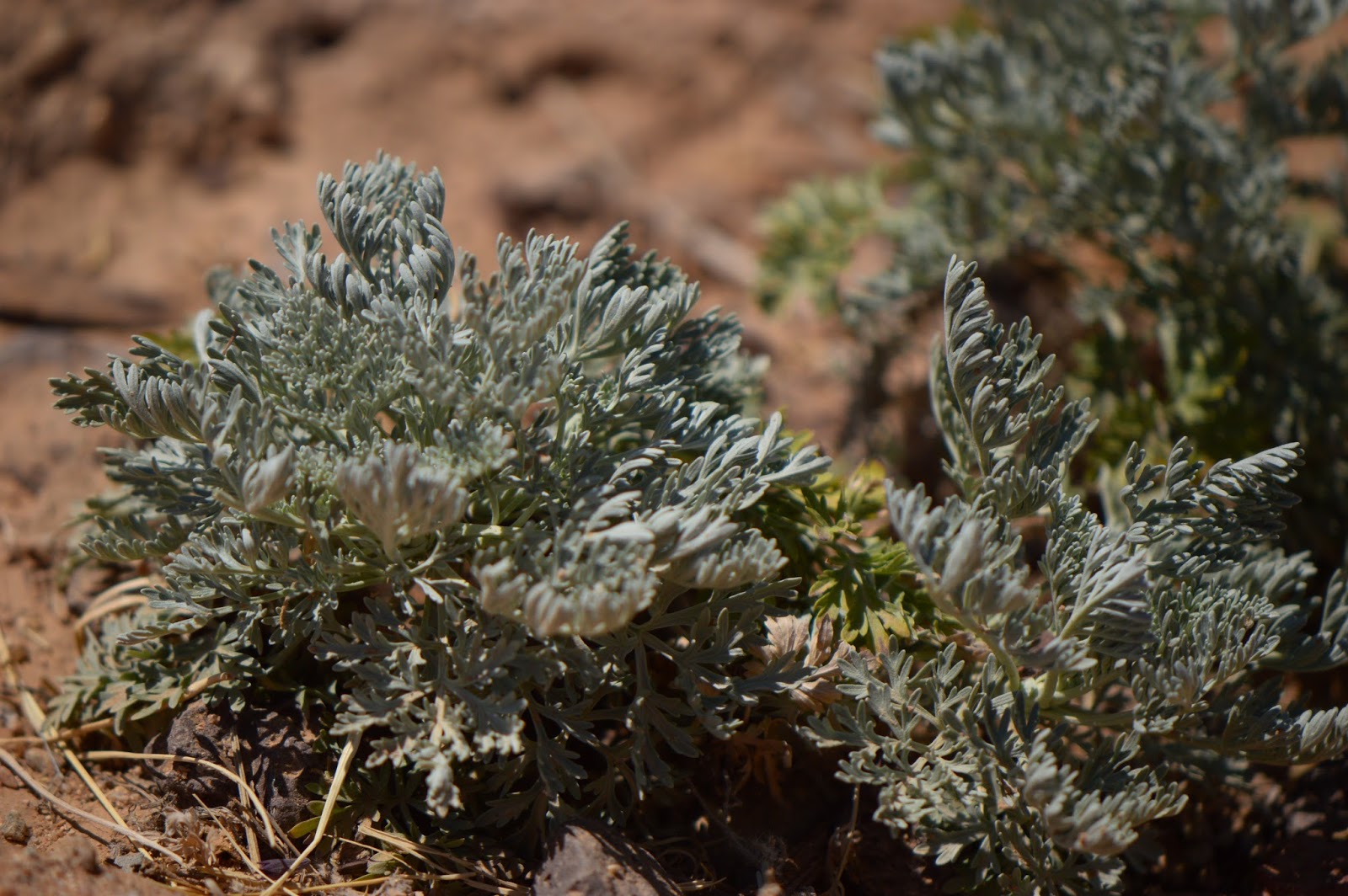
Another silver-leaved plant is Artemesia "Powis Castle". It is still very small, but I have great hopes for it and have it positioned to fill out the southeast corner. I was unsure of its capacity to survive here, but a look online at Dave's Garden shows reports of it thriving it such hell-hot places as Las Vegas, Nevada and Los Lunas, New Mexico, so probably it can take my Arizona location also. So far, at least...
In a cooler green hue there are the Salvia greggii plants, "Autumn Moon" and "Flame". Both are keeping their chins up. "Flame" is actively blooming, but "Autumn Moon" is sagging quite a bit just now. I attribute this to three causes: the heat, an overdue need for deadheading, and a misplaced argument with BettyTheDog over lizard hunting. The latter set-to broke quite a few branches from the middle of the shrub, but it should have no difficulty resprouting when things cool off a bit.
Other sizeable Salvias include S. officinalis, which has proved as rugged as any and has new growth even now, and S. elegans. This, the pineapple sage, does not bloom heavily but maintains a refreshingly green presence up by the patio, where it throws out a few brilliant scarlet flowers from time to time. It has no problems to speak of, except what appears to be ongoing grasshopper damage. I believe our toad population has begun to keep that in check.
Roses
Moving on to the next section of plants, equally structural but deserving a separate place, we have the roses. Most of these have paused a bit with the heat, or have they...?
Graham Thomas certainly continues to bloom, but the weather takes its toll as the blooms are smaller and often crispy before the end of the day. A glorious rose nevertheless.
The Generous Gardener is setting buds...
...as is Crown Princess Margareta, while St. Swithun is once more focused on just growing.
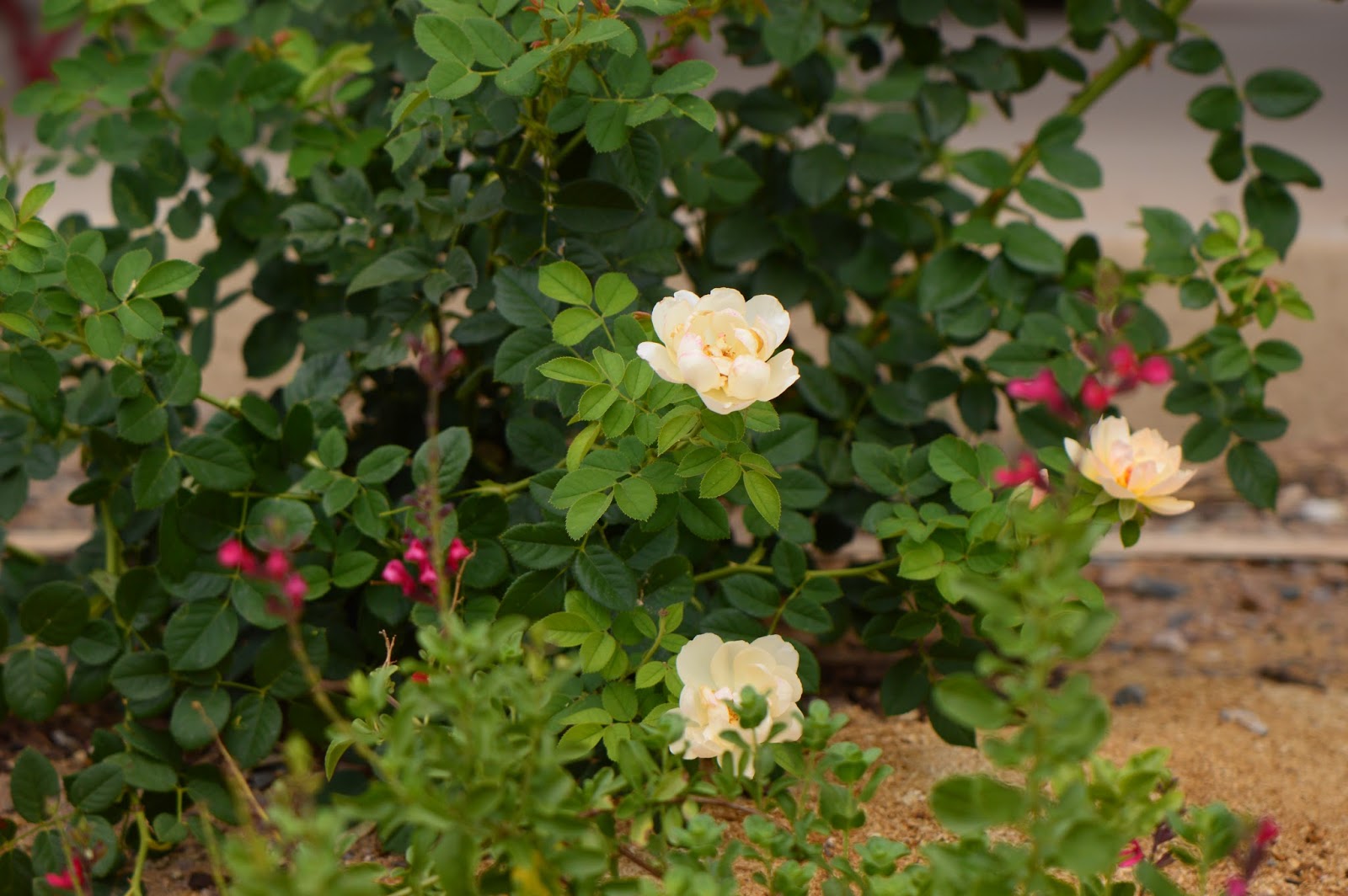
While these roses are in the Rose Border along the back (southern) edge of the patio, the roses in the central bed of the garden (east) are also coming along. The Alnwick Rose got off to a slow start, which I blame on spider mites, so there has been little to show as yet from this favourite of mine. Wollerton Old Hall is trying to commence blooming once more.
Sterling Silver has simply stopped doing anything though it looks all right. And tiny Daniela, the miniature, puts out one or two perfect red blooms regardless. Well, almost perfect; the latest is a bit more pink than red, and slightly cooked. Not bad, though!
Midsummer Bloom
And now on to the few plants, brave or reckless, that find it possible to bloom regularly in this weather. Not surprisingly, the foremost are from the desert and tropical Americas. Chrysactinia mexicana has continued to bloom, only now winding down as it sets seed - a second time!
Tetraneuris aucalis has also just paused, but until a few days ago had a fine showing of yellow daisies as well. I hope to eventually have a good stand of this very low-growing plant. It has a great deal of impact for its size.
The Agastaches, varieties A. aurantiaca "Apricot Sprite" and A. "Ava", were expected to wait until July or August; but here they are, flowering. "Ava" in particular is requiring frequent watering due to its determination to bloom and form a root system simultaneously. This variety is expected to be 4 or 5 ft tall (about 1.5 m); it still has a good deal of growing to do. But it is blooming instead, even though I cut off most of the bloom stems nearly a week ago just after taking the photograph below. Both of these Agastaches got off to a late planting in any case - mid-May, or thereabouts. They deserve a good deal of attention from the gardener. I'm trying to give it to them! Here is Ava last week, looking a bit wilted.
And again, quite a bit better after being partially cut back and treated to more frequent watering.
"Apricot Sprite" has had a better go of it; it is in a kinder location in the garden certainly!
Probably the most robust bloomer of them all is Russelia equisetiformis "Big Red". It is phenomenal, never entirely without blooms, requiring only some shade, some water, and a good feeding every couple of weeks. Whether it would do as well further down the garden in more sun is beside the point. It has been a very rewarding plant, and deserves its comparatively pampered location!
Last among the blooming plants is one which just opened it first bloom. I have only a picture of buds at that, but Mirabilis jalapa has managed to reach bloom stage in spite of everything. I have a special liking for this plant, partly because it was a favourite in my earlier garden and partly because I grew this one from seed last spring. It is still very small and looks a little fragile. I hope it comes through the summer well. It was fairly perennial even in my Midwestern garden, surviving a number of winters, so my only question here is how well it can survive summer. This is a plain pink variety.
Succulents
Again, some of these plants are fairly in the structural category, but it makes sense to treat them as a distinct group. They are some of the best and also some of the most tempermental plants I have.
Senecio talinoides var. mandraliscae "Blue Fingers", to give it its full name (which I rarely do!) is among the heroes of the garden so far. It is stunning in both colour and habit. It is showing some dying off at the edges, which will hopefully stabilize soon. I have just checked and determined it is probably a question of too little water, rather than too much. Two stems that I used in a Monday Vase many months ago have rooted and will be added to the garden when the weather breaks. I love this plant!

Cistanthe grandiflora is even more spectacular and quite a bit larger. It, however, is melting out at present. Once more I am not certain whether this is the result of overkind watering (not to mention an idiotic sprinkling of mulch, which I could never entirely remove) or simply to the heat. It is behaving on a much larger scale much as it did in its little pot last summer, when I nearly gave up on it altogether. This time I am under fewer illusions. I have reason to believe this plant will survive just fine. I am waiting...
On the other hand, Sedeveria "Sorrento" is a quiet little thing, low-growing and staying very much within bounds, but showing no signs of faltering either. It still has some flowers open. It has been a very attractive plant at all seasons. It is rather small in scale, and I need some more to make it more visible!
I am finding that Echeverias, though darling at the GC, simply cannot take the heat here. Enough said! The Lampranthus planted around a month ago, is either going dormant or being eaten by rabbits. Suffice to say, it is now leafless. There is no question in the case of little Aloe "Walmsley's Blue". I had no idea rabbits would eat an aloe! I am not pleased. At all. I would like to think there is the ghost of a chance (more or less literally) that what remains of WB will come back from the roots. Sigh...
Miscellaneous
And now for the little plants and the non-June-bloomers and such. Among these are some plants that show great promise.
Salvia reptans, for instance. This appears to be the most intelligent plant in the garden. It has had buds along its stems for weeks. When watered deeply, it opens a few. Otherwise, it is waiting till conditions are more favourable. Frankly, I am very happy with this behaviour. It is saving me a great deal of effort being expended on ambitious Agastaches (they were planted at the same time, and S. reptans is growing right next to A. "Ava", so this is a fair comparison.) At the same time, it is growing taller and taller. Just as it should be.
Foliage is wiry and desert-adapted with a handsome black sheen to the lower stems.
Planted at the same time (and from the same High Country Gardens order) was Aquilegia desertorum. Although it can bloom all summer, it is also waiting, only putting on new growth at this point. The devilishly dry, hot winds we had for a few days did do some damage, but this seems to be a very sturdy plant despite its delicate scale. Here it is seen in front of Gaura lindheimeri, which has also settled in well, not blooming but quietly growing .
The other plant from that order was Phlox grayi, which is still alive but has never really taken hold and grown. I have been waiting its final demise for weeks, but it hasn't taken itself off either. So I keep it watered and very lightly fed, and I continue to hope because the two blooms that it insisted on putting out were quite lovely. It would be a plant to put a little extra effort in for. Both the Aquilegia and the Phlox are listed with southern limits of USDA zone 8. I am in 9b. This may be an issue... or not...
Equally small but indubitably well-settled is Thymus citriodorus, the little lemon-scented thyme, which even continues to carry a few small blooms. I clipped it back well about a week ago. Lovely plant!
Berlandiera lyrata needs a thorough deadheading which it hasn't had yet. But it looks happy and relaxed at the foot of the Acacia. Yes, relaxed is the right term; it is, in fact, lolling about on the ground.
Penstemon parryii is doing well; its new growth is maturing calmly, as though the plant were growing in its native element - which it more or less is. This has been such a splendid specimen that I hope to make this Penstemon something of a signature plant in future.
Sadly, most of my summer bulbs have found life difficult to impossible. The Ixia has mostly refused to show. One clump of Crocosmia "Lucifer" went too dry and was promptly torn up by the rabbits, who seem to have a prediliction for drought-stressed plants here, no matter how leathery the leaves. I feared that the marvelous Anigozanthos "Bush Ranger" had succumbed to the same fate, but just this evening I noticed some new green tips poking up from the soil. Perhaps this will be one case of the plant outwitting the rabbit? The other clump of Crocosmia was looking good until the hot, hot winds began to blow. Now they look rather brown and dry. Galtonia candicans, the summer hyacinth, has fared a little better but clearly will need more shade if I try it again. The leaves are actually sunbleached. I see no signs of a bloom stem either, which worries me as so many bulbous plants have come up blind when they have come up at all. All in all, bulbs are not a reliable choice here seemingly.

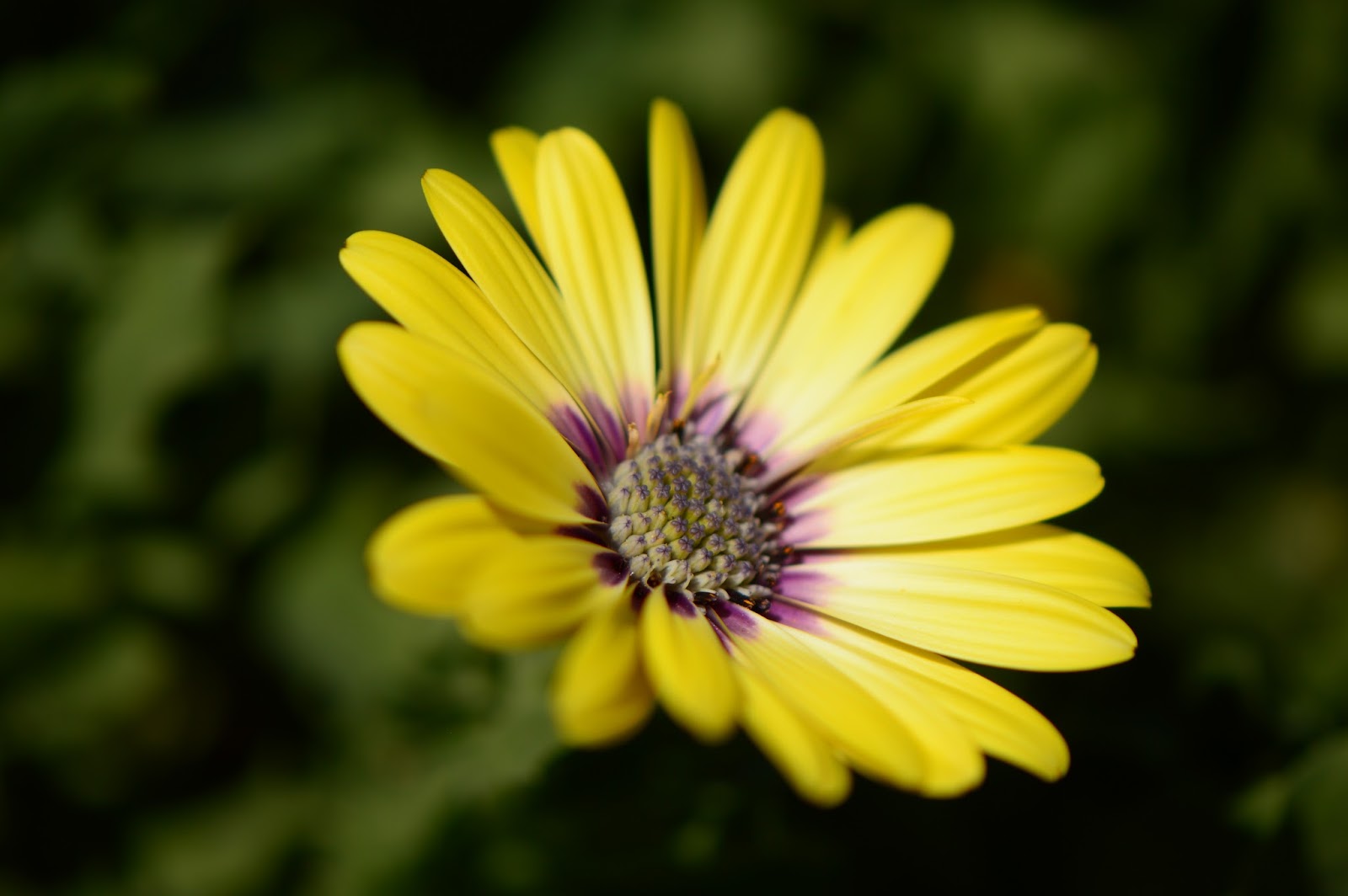
Osteospermums have a better record so far. O. "Mimosa Sunset", with its spectacular orange flowers, has sadly decided it was an annual. But "Blue-Eyed Beauty" and "Sideshow" are faring better. These have dark green leaves and a sculptural effect that makes them well worthwhile even apart from their blooms. Which is just as well as neither can bring its flowers into play just now. "Sideshow" sets many, but they wilt by midday. "Blue-Eyed Beauty" gives just a few now and then. I am hoping to get a better show later in the year.
Also in a holding pattern are the plants of Oenothera pallida "Innocence". A few blooms still appear overnight, but the plants generally look quite dry. Curiously, one which I had assumed was dead has sprouted new growth from the base. I am noticing this process beginning on another as well. Perhaps these plants will take a new growth and bloom spurt a little later in the season.
I have been a bit disappointed with Dietes irioides so far as the flowers have been very small. On the other hand, it is blooming, even now; and the flower size is probably due to my reluctance to feed it very much. I intend to be a little bolder in future.
One more plant has not been mentioned for quite a while because it comes into its own much later in the year. This is Muhlenbergia capillaris "Regal Mist". It seems to be taking the weather in its stride. It is not known as the most xeric of grasses, but it has had no difficulties on that account. From its close to the ground trim in early spring, it has grown into a handsome plant. I don't expect its filmy pink bloom till September.
For the Future
This month I am gaining a good deal of perspective on what will be needed as the garden takes on a more definite form. I still need more plants that will produce a stronger sense of structure. Small trees, in particular, are priority - for shade as well as vertical form. Some of the plants that have proved themselves happy here should be divided if possible. It would be wonderful to be able to mass the columbine, the agastaches, the anigozanthos.
As far as structural plants are concerned, I already have a couple of plants waiting in the wings. Convolvulus cneorum will hopefully become a good garden fixture, a small shrub with magnificently silver leaves. Its white flowers come earlier in the year. This plant arrived from the clearance shelf at Lowe's and was duly christened Clarence by my sister. Clarence keeps wilting down of a morning. His failures, both at the store and here, may well be due to being rootbound. I'm wondering just how soon I can afford to get him in the ground. Digging a hole is not a pleasant operation just now! This is a plant I am reasonably confident in as I see it used fairly frequently around here.

And then there is the plant I was not going to try to put in the garden. It gets too big. But it is the one plant that blooms, really blooms, in June in the desert. Also in July and August. This is Caesalpinia pulcherrima, known locally as Bird of Paradise though totally unrelated (and unlike) Strelitzia reginae, which bears that title elsewhere.
I found it available in the right size (very small) at the right price ($4.98). I bought it intending to put it at the front or side of the house. But I would so like to have those huge, brilliant, delicate flowers dancing in the garden just now. Ultimate size varies... Overall plant texture is very refined... Maybe I can grow it so it won't get too big for the east bed, where it would be a perfect addition. I am fairly certain that I will try!

For those who have been interested enough or kind enough to read to the end of this longest of posts, thank you! I wanted to give a good look at where the garden is as we turn to the other side of the year. On the whole I am pleased. The basic idea of a traditional and semi-formal shrub and perennial garden remains intact and ready for extension and refinement as I become more experienced with the climate and the plants. And despite some failures with the latter, there are plenty of selections that are proving their worth here. The past week has seen me pretty well exhausted from pulling a hose around, but the heat and, especially, the wind have eased up a little. So back to it! I am interested in seeing how things fare through the rest of summer. Even more, I am looking forward to September and the start of the next planting season. I am full of good ideas!
Weather Diary: Clear; High: 108 F (42C)/Low: 86 F (30 C)