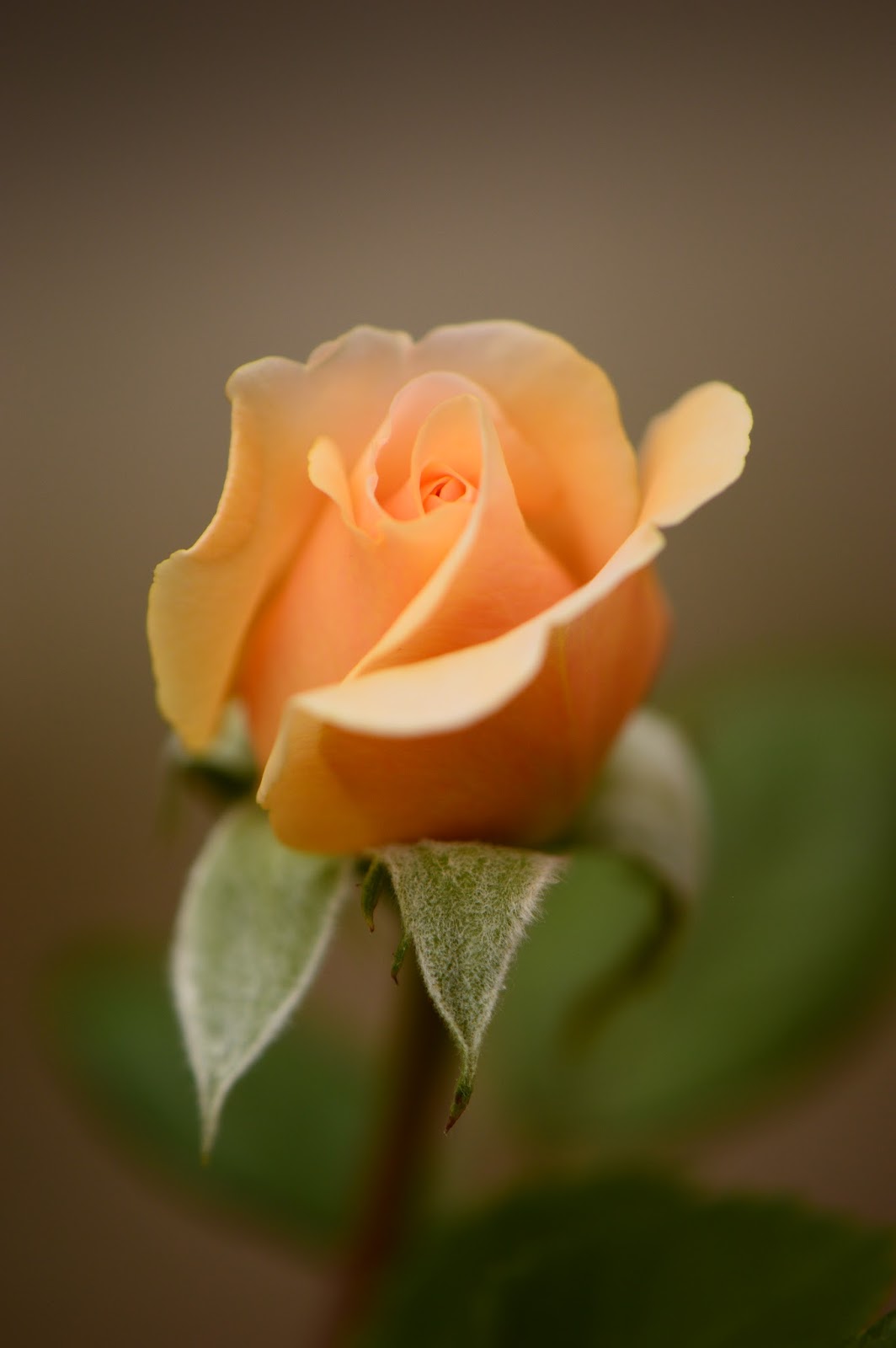
This month, for the first time, the scents in the garden are dominated by the presence of roses. This is true even though not all have begun blooming yet; as I noted in my last post, James Galway is taking a little extra time to settle.
But overall, the new roses are getting into stride. Graham Thomas has just opened a first bloom though the plant is still not more than a foot and a half high.
The scent of "The Generous Gardener", which has begun to be very generous indeed with its blooms, is superb. It is markedly old rose in character, which is also true of the quartered flower forms.
Blooms continue to be lighter than anticipated, but the same happened with the first flush of blooms from Crown Princess Margareta, so I'm not yet debating the identity of the rose. Crown Princess Margareta is now consistently blooming in luscious apricot hues with, of course, a lovely, full fragrance. Only buds just at the moment...
...also true of St. Swithun, which is setting up its first now. I include it though, honestly, the flowers are not yet open enough to smell.
I still have no good pictures of The Alnwick Rose, but its scent is certainly one good reason to grow it. Wollerton Old Hall has also paused. However, the old hybrid tea Sterling Silver is in full bloom. This variety has a reputation for being a bit weak when young; but in this garden it has grown and flowered freely. Perhaps this Massachusetts-born rose prefers desert conditions after all! Its classic tea fragrance is second to none.
Aside from roses, there are a few fragrant flowers that have been in bloom for months, as well as a couple that were not expected so early. The latter group includes Agastache "Apricot Sprite", known as licorice mint because of its strong, minty scent.
This is a young plant which came from High Country Gardens back in March. Both this one and A. "Ava" are anticipating their expected late summer bloom time by several months. However, as they are growing vigourously, I am not too concerned.
Another plant which arrived with them is Salvia reptans, sometimes called West Texas Grass Sage. It is also going ahead early and sending out its miniscule but magnificently blue flowers. Scent, while present, is perhaps not its strong point: pungent with, to my nose, a hint of gasoline. Perhaps it would be better to note that many desert plants have fairly pungent fragrances of the love-it-or-hate-it type. Despite my description, I don't actually mind the smell of S. reptans. I would definitely grow it for the colour more than the scent, however!
A dry-country plant with a much sweeter smell is Berlandiera lyrata, the chocolate flower. It had just begun blooming when I first posted for the Scent in the Garden meme. At that time, I could hardly smell it, since when the fragrance has become unmistakeable. I can only describe it as distinctively chocolate without sending one immediately in search of a candy bar. Carob perhaps? In point of fact, the plants apparently are edible and were used as a food source by native Americans, though it is presumeably without the intense flavour appeal of chocolate. In bloom since February and still loaded with flowers, this is proving to be a very garden-worthy plant here. Shown with friend...
Berlandiera is fragrant in the mornings, while citrusy Oenothera pallida "Innocence" continues to scent the air after nightfall, making it much harder to grab any pictures!
Other long-blooming fragrant plants include Salvia greggii "Autumn Moon"...
...and now "Flame", which has been so woebegone that I transplanted it up into a shadier spot a couple of months ago. It does look better now, a little less like a limp rag and more like Autumn Sage. A few of its bright scarlet blooms are in evidence from time to time. The scent of Salvia greggii is much more minty than culinary sage. Both flowers and leaves seem to carry the same fragrance.
Another fragrant sage variety now in bloom is Salvia elegans, whose scent earns it the name of "pineapple" sage.
Then there is Lavandula "Goodwin Creek Gray" thought to be a variety of L. dentata, To my surprise, I watched a hummingbird feeding from these flowers the other afternoon; I had not seen her on the L. stoechas plants and had begun to assume that lavenders were not useful for the hummingbird garden. Apparently, "Goodwin Creek Gray" was highly satisfactory to her as she came back for more.
There is a light sweet fragrance from Armeria, which has not proven very happy here but continues to bloom for the time being...
...and, going from strength to strength, Cistanthe grandiflora. Though I have to bury my nose in its cups to get the sweet fragrance, it is there! The bees love it also, by the way.
That is a fairly complete listing for the month of May! As weather has turned a bit wetter the past two days, the overriding scent is the wonderfully pungent tang of the wild creosote bushes (Larrea tridentata) covering most of the open land around us. Creosote blooms in response to rains, so we will probably have a new flush of their little yellow flowers. In the meantime, there were already plenty of furry seedballs on the plants. I love the way the sunlight glows through them.
Weather Diary: Mostly sunny, High: 83 F (28.3 C)/Low: 60 F (15.6 C)
A small garden in the English style, set in the wilds of the northern Sonora Desert...
Showing posts with label armeria. Show all posts
Sunday, May 17, 2015
Sunday, March 15, 2015
Blooming in March
It is March in the small, sunny garden now. Several plants that went into the ground last autumn are only now coming into bloom, while others continue along at full speed. A few, such as the two Eremophilas, "Valentine" and "Outback Sunrise", are slowing down.
At the moment, the plants with the most flowers are surely Chrysactinia mexicana and Salvia greggii "Autumn Moon". Chrysactinia mexicana, or Damianita as it is called, is just coming into full bloom at the top end of the garden.
It is still a small plant, but noticeably larger than when I put it in the ground last October. As you can see, it is covered in open daisies and buds. The flowers are small, but their colour is brilliant! I wrote a more complete post on it just over a week ago when it first began to flower.
Salvia greggii "Autumn Moon" has bloomed - with one brief respite - since planting last fall. A couple of small Armerias are tucked in next to it, creating this little tableau... At this stage the Armeria is proving much less xeric than the Salvia, though the Salvia did require frequent watering for a month or two after planting. Not so now!
Walking on down toward the east end of the garden, I come to Penstemon parryi. This Arizona native is perhaps the most elegant plant in the garden at present.
Nearby are a few more daisies from some Helipterum roseum seeds that I started during the winter. They actually sprouted and grew on in the front patio, where temperatures, though cold, did not drop low enough to kill anything but my basil. These paper daisies (from the old standby "Best Mix" courtesy of Park Seeds) have so far given me pale pink and medium pink flowers. Now some whites are beginning to bloom as well. At this point they are taking the sun and warmth well and not requiring too much water to put out their flowers, which are papery and fluffy at the same time. These are classic everlastings, so I need to start cutting some for those flower-sparse times later in the year!
Then around to the Dry Corner and Tetraneuris aucalis. Like the Damianita, it is covered with flowers and buds - just not quite so many, and the flowers are, of course, larger...
They grow on long stems so the blooms are displayed well above the low mat of foliage.
Returning toward the patio, here is another plant which has been in full bloom for perhaps the last two months: Russelia equisetiformis. "Coral Fountain" is one of its common names, and it is living up to it!
And just beside it is the first flower on Dietes iridioides, the sturdy, dry-climate iris relative that cycles frequently in and out of bloom, earning it the name "Fortnight Lily".
There are a number of other blossoms scattered around the garden - violas, lavender, osteospermum, rosemary, lemon thyme. And Berlandiera lyrata is still sending up flowers though I forgot to catch any pictures! It is a rich time for flowers just now.
Linking with Carol's Garden Bloggers Bloom Day meme for this month, where it is possible to see many other lovely plants as spring finally comes into its own...
One more picture of Dietes iridioides...
Happy March!
Monday, February 16, 2015
Monday Vase: Far from the Sea
Today's vase must be considered in the light of an experiment. The idea was one which I'd had over a month ago: combine succulent foliage - particularly Senecio "Blue Fingers" - with a seashell. The succulents do sometimes have a curious sea-look to their fleshy leaves, and the seashell will hold water.
All very true, but getting the shell to stay put and not roll over necessitated use of unsightly wads of Sculpey, the polymer clay, all round the base of the shell. (I tried less at first and spilled water over an envelope all ready to send to the accountant. I've been that way today - brainless!) I set everything up on a small mirrored square, and it has stayed successfully in place.
So with that explanation, here is the result.
In addition to the Senecio, I added a sizeable clump of Calandrinia grandiflora foliage. This plant, which was all but gone last December, has made a heartwarming (frightening?) recovery. This is the greyer, rounder foliage at the narrow end. And then four Armeria heads, some nearly spent, some new, were slipped in to complete the effect.
And for those of you who are noticing a totally different look to the blog... well, that may be one reason I've been a little flighty today. With the template I was using, I had been unable to set up for subscription and the text had somehow become jammed at too small a size. I've been tinkering off and on for weeks but finally decided that perhaps it wasn't all user error. It might be my choice of template. In attempting to change things I went through various adventures, from apparently resetting the template to one I detested, to - much worse - finding that it showed only code... no blog at all...
I think it was worse on this end than anywhere else - some of you may know differently! At any rate, the blog is reconfigured at last, and it has subscription widgets and 16 pt text. Maybe the text size is a little too large now? I'd really appreciate feedback!
Despite it all, I did finally manage to create my experimental seashell project to join with Cathy's Monday Vase meme at Rambling in the Garden. I'm still intrigued with this idea and hope to play with it again sometime.
Happy Monday!
All very true, but getting the shell to stay put and not roll over necessitated use of unsightly wads of Sculpey, the polymer clay, all round the base of the shell. (I tried less at first and spilled water over an envelope all ready to send to the accountant. I've been that way today - brainless!) I set everything up on a small mirrored square, and it has stayed successfully in place.
So with that explanation, here is the result.
In addition to the Senecio, I added a sizeable clump of Calandrinia grandiflora foliage. This plant, which was all but gone last December, has made a heartwarming (frightening?) recovery. This is the greyer, rounder foliage at the narrow end. And then four Armeria heads, some nearly spent, some new, were slipped in to complete the effect.
I think it was worse on this end than anywhere else - some of you may know differently! At any rate, the blog is reconfigured at last, and it has subscription widgets and 16 pt text. Maybe the text size is a little too large now? I'd really appreciate feedback!
Despite it all, I did finally manage to create my experimental seashell project to join with Cathy's Monday Vase meme at Rambling in the Garden. I'm still intrigued with this idea and hope to play with it again sometime.
Happy Monday!
Sunday, February 15, 2015
Flowers and Fragrance
For which reasons, I will go ahead and combine the two themes today. The search for fragrant flowers has, not surprisingly, induced some curious gymnastics around my garden since most of my plants are still very small and can only be smelled by getting down on hands and knees, or by standing on one's head.
The photo below is a case in point. At perhaps 12 in/41 cm high, the young lavender "Blueberry Ruffles" has finally begun to bloom; in fact, it is loaded with buds. It had a difficult start, needing quite a bit of watering and general fussing over, but it is holding its own now, and the bees have discovered it.
| Lavendula stoechas Madrid |
Another flower that I have spent some extra time attempting to smell is the recently bloomed Berlandiera lyrata, with its elusive chocolate scent. Smell or no, it is a wonderful addition to the Dry Corner by the acacia.
I was happily surprised to find how sweet a smell there is in Armeria. No wonder the bees like it; I do too! (No bees in this picture - only a small garden spider...)
Nearby, Salvia greggii "Autumn Moon" is beginning to bloom again after a brief rest, while S. g. "Flame", on the other side of the bed, is just starting for the first time. Here the flowers seem simply to carry the fragrance borne by the leaves. I am liking this scent more and more - not to mention these plants as a whole, though Flame does show a tendency to sprawl across the ground...
| Salvia greggii "Flame" |
| Salvia greggii "Autumn Moon" |
Just beside the pink and white of S. g. "Autumn Moon", there is the wonderful miniature rose "Daniela", with a sweet rose fragrance in blooms that are actually quite large and sturdy on this little plant.
And finally we will go just beyond the garden - as presently laid out! - to where the apricot tree opened its first blossoms this morning. Several are just at nose-level; scent is light but sweet, the fragile beauty of the flowers is unmistakable.
So there are the blooms, in particular the fragrant blooms, to be found in my garden now.
ed. And now I can also link to the Scent in the Garden theme at Wellywoman's blog!
Friday, February 13, 2015
Variations in Red
Having posted about a blue flower and then about yellow flowers, I decided to round out the trio with a post on the red flowers currently blooming in the garden. Besides, what could be better for Valentine's Day than a collection of red flowers?
There are, of course, the red buds, pink flowers of Eremophila "Valentine", so spectacularly in bloom right now. Its size, its evergreen foliage, and the colour and slight translucency of the flowers allow it to have something the effect of an azalea, under conditions of intense sunlight and dry soil.
Strong reds, I find, look good here in the desert, from scarlet to deep crimson; and I have already managed to collect some rather vibrantly coloured blooms. In retrospect, one reason there are so many is because I am trying to ensure a good supply of hummingbird plants, and hummingbirds do seem to like them red! The most obvious example is Russelia equisetiformis, just returning to full bloom. Not fragrant, its brilliant scarlet trumpet blooms seem to satisfy the hummingbirds nicely.
Another hummingbird plant is Autumn Sage (Salvia greggii). I've shown the variety "Autumn Moon" here frequently...
...but the more recently planted "Flame" is also coming into bloom at last. Its hue hovers between scarlet and crimson with a light gold dusting on the hood.
Another striking red has come from the Australian Kangaroo Paws, Anigozanthos flavidus "Bush Ranger". Most of the flowers are spent and a good deadheading is due, but a few smaller clusters have emerged. By the way, hummingbirds have been observed on this plant also.
Then there is a beautiful foliage red from Sedeveria "Sorrento". The leaves were a softer green with red tones when I purchased the plant, but the foliage took on these strong mahogany hues soon after planting. At first I thought it was the result of lower temperatures; now I suspect it to be due to the amount of sunlight, in which case it should certainly maintain this colour.
A more recent addition - in a colour I am exceedingly happy with - is an Armeria. It has been blooming profusely, despite the leaves wilting badly several times before I realized it would require extra water as it was settling in and blooming simultaneously. The blooms never faltered and are a luscious deep hue.
Lastly, the red, red rose... This is a miniature with a great deal of substance to the flowers. The variety is Daniela, a Kordes & Sohne introduction. It came home, most unfortunately, with spider mite; and the plant was nearly defoliated. It is putting out some new growth now, along with a couple of lovely blooms, large for the size of the plant. If the little bush makes a full recovery, it will be a fine addition to the garden. Setbacks notwithstanding, it seems to be a vigourous selection; and the blooms are exquisite with a light rose-scent and a perfect deep crimson colour.
Subscribe to:
Posts (Atom)