Showing posts with label Olla. Show all posts

Thursday, July 16, 2015

Blooming in July

Rose "Crown Princess Margareta", Desert garden, July bloom
This is certainly not the lushest time in the small, sunny garden!  But as it is Garden Bloggers' Bloom Day, here is a look at what is in bloom just now.  

Because there are some very special plants in flower in spite of the weather. Some of them are one-bloom-at-a-time sorts, like the two Osteospermums that throw off the occasional blossom.  "Blue-eyed Beauty"...
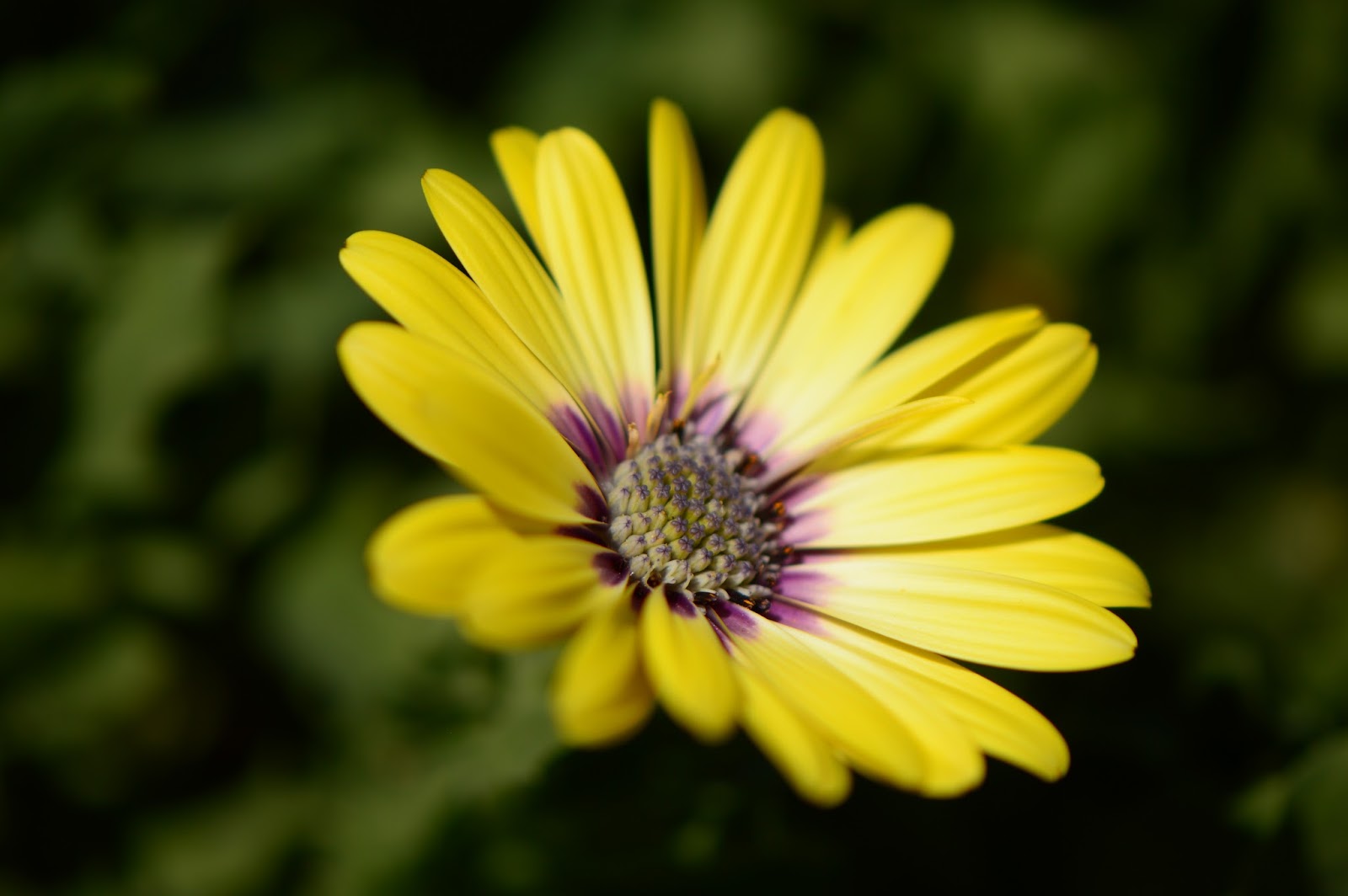
Osteospermum "Blue-eyed Beauty", desert garden, July bloom
...and "Sideshow" are neither of them blooming heavily, but they are willing to smile at the world from time to time.  I look forward to a stronger showing when weather eases up.
desert garden, July bloom, Osteospermum "Sideshow"
Agastache "Ava" continues to bloom with great pertinacity.  I still think she would be wiser to get settled into the ground first, but she has other ideas.  So far the blooms are much more delicate than I expected.  Sadly, A. "Apricot Sprite" collapsed, apparently a watering failure on my part; but it took me entirely by surprise.  "Ava" is set to be a considerably larger plant in future years, and she holds court down at the bottom of the garden, an area still very sparsely planted.
desert garden, July bloom, Agastache "Ava"
Other plants are just beginning a bit of a blooming spree.  For instance - to my great delight - Gaura lindheimeri is opening a new set of blooms.  I cut it back shortly after planting, and it has responded with plenty of bushy growth and now a new flush of flowers coming on.  I suspect this is the variety "Siskiyou Pink", but the plant was labelled only with the species name, so I'm not sure.  Are there any other varieties in this colour mode?
desert garden, July bloom, Gaura lindheimeri
Leucophyllum - variety unknown, in this case - is considered highly reliable here, and it has been growing rapidly after a slow start.  Now it is sending out a new set of flowers.  Here is a close-up of one of the blooms with its lavender trumpet and speckled throat.  They are not overly large or showy but a very nice addition to a handsome evergreen shrub.
Leucophyllum, Texas Ranger, desert garden, July bloom, flower
Lavender "Goodwin's Creek Gray" has been opening its new flower stalks for a week or two.  I have certainly found a favorite in this one!
desert garden, July bloom, Lavender Goodwin's Creek Gray, lavendula
On the other hand, though Perovskia atriplicifolia is blooming, I cannot convince myself that it is really happy.  It has not grown strongly, and I lose a stem or two from time to time for no obvious reason.  This is one plant I had expected to be a good choice in this garden, but now I am not so sure.  Maybe it just needs another year of growth?
Perovskia atriplicifolia, desert garden, July bloom
And now, cheating just a little, I introduce an almost-blooming plant: Galtonia candicans, the summer hyacinth.  This is a summer-blooming bulb, native to South Africa.  Though not particularly drought-tolerant, it has held up well to the heat.  It was one recipient of an olla, which might have helped it pull through the worst of the weather in June - at least I can't help hoping so!  I have never grown it before and am waiting the opening blooms excitedly.  I have a hunch they won't last till next month, so here they are... as far as they've gotten...
desert garden, July bloom, Galtonia candicans, summer hyacinth
And then there are a few plants that have gone on and on, blooming.
  
Russelia equisetiformis holds the record, so far!
desert garden, July bloom, Russelia equisetiformis, Coral Fountain
Salvia greggii "Flame" has closed the gap made by a resting S. g. "Autumn Moon".  Flame has not been without a flower since May, I think.
desert garden, July bloom, Salvia greggii Flame, autumn sage
Autumn Moon looks set to start blooming again soon; it is already opening a few new buds.  Below it, miniature rose "Daniela" has continued blooming, but flowers at present are single.  Still bright red... and a few pavers have gone in along the Central Bed.
desert garden, July bloom
Crape Myrtles... yes, in the plural now...  Two days ago I happened onto a not-to-be-missed second one.  It is duly installed in the patio awaiting better planting conditions.  This one is "Dynamite", a bright red with occasional white.
desert garden, July bloom, Lagerstroemia, Dynamite, crape myrtle
 I finally did a little research and learned that both of these varieties bloom the summer long.  They start late but can continue flowering into September.  Now I understand why Rhapsody in Pink has gone on and on...  I'm thrilled with these plants. 
desert garden, July bloom, Lagerstroemia, Rhapsody in Pink, crape myrtle, crepe myrtle
And the roses are doing their part.  None are blooming heavily, but several refuse to stop for the heat.  Crown Princess Margareta is closer to her normal colour now.
rose, Crown Princess Margareta, desert garden, July bloom
St. Swithin is doing well, though blooms are only semi-double...
desert garden, July bloom, English rose
...while Wollerton Old Hall has single blooms that look magnolia-like at present!  No, I am not complaining, merely waiting for cooler weather.  (Yes, this really is Wollerton Old Hall!)
desert garden, July bloom
With rain forecast for much of the next seven days, a lot may change in the garden.  It may become possible to plant out some of my finds from the past several weeks.

Better than I expected for July's Garden Bloggers' Bloom Day with Carol at May Dreams Gardens.

One more look at the Gaura...
Gaura lindheimeri, desert garden, July bloom
Weather Diary: Fair; High: 106 F (41 C)/Low: 84 F (29 C)

Wednesday, April 22, 2015

The Garden Olla Project, Part 2

As you may remember, I reported recently on the first phase of my "garden olla project".  I had made several pots of porous red clay in an experiment with this traditional irrigation method.  The other day I finally "planted" the pots out in the garden near a few plants I wish to keep a little moister by the age-old technique of allowing slow water seepage through the naturally slightly porous clay pot.  (Olla is the Spanish - also Italian - word for the standard cooking pot, repurposed over the centuries for garden irrigation.  As the technique was brought to the Americas by the Spanish, the Spanish word is the one in use here.)

To start with, I wanted to set one by Aquilegia desertorum.  This small columbine is native to Arizona, as well as New Mexico and Colorado.  But it is a plant from mountain slopes and is said to require "average" moisture, though known to survive well at lower elevations.  So the first pot went in beside the new Aquilegia.
In future, I will make longer necks for the ollas!  I would prefer to completely cover the shoulder of the pot to fully minimize water loss.  However, here we are for now...
Also, I will make lids for future ollas...   As it is, I am using the alternative method of laying a rock over the mouth of the pot.

The delicate aquilegia, rather smaller than some of its garden relations, had just put out its first bloom.  Definitely a plant to keep!
Aquilegia desertorum
Just to demonstrate the concept, I took pictures of the colour change that occurs as water seeps into the pores of the fired clay.  I did not check the time sequence, but this alteration did occur fairly rapidly, much the same as it would with a watered clay flower-pot - just without the drainage hole to release most of the extra water.  It takes longer for the water to actually begin seeping out into the soil.  That is a much slower process, allowing this to be a time-release watering system.
At this point the clay is darkened about halfway down the sides of the olla.  This is water coming from within the recently filled pot.
So, a little work with the spade, a quick fill with the hose, a rock  on top, and the job was done! garden olla project    
Garden olla project
As you can see, this one went directly beside the rose "Wollerton Old Hall".  The third is between Salvia greggii "Autumn Moon" and a little clump of Galtonia candicans which, being a summer bulb originating in South Africa, is not expected to be particularly drought-resistant.  I am afraid I will need to move that olla if it is to do any good.  It is too small to get the moisture to both plants, I suspect, and may prove to be the proverbial sitting between two stools...  At any rate, it is much easier to "transplant" than a plant would be!

As it is now about a week since I put the pots in the ground, I can report that 1) I need to watch the water level more closely as the water does indeed drain through the pot over time!, 2) these are too small to form a serious reservior for desert summer conditions, but 3) the surrounding soil is kept moister and therefore softer, surely creating better growing conditions for the plants.  This is certainly a technique to be pursued.  I just need to throw larger pots!

Here are Wollerton Old Hall, the rose above...
Rose "Wollerton Old Hall", English rose, David Austin rose
...and another picture of Aquilegia desertorum.
Aquilegia desertorum
Weather diary: Mostly clear, High: 84 F (28.9 C)/Low: 55 F (12.8 C)